Bitcoin vs Ethereum for Online Casino Transactions

Bitcoin vs Ethereum for Online Casino Transactions
Bitcoin and Ethereum are the two most popular cryptocurrencies for online casino transactions in the UK. Both offer faster transactions, better privacy, and enhanced security compared to traditional payment methods. Here's a quick breakdown of how they compare:
- Bitcoin: Known for its reliability and security, but transactions can take 10–30 minutes and fees range from £0.80 to £4.00. Ideal for high-stakes players and larger transactions.
- Ethereum: Faster (15 seconds to 2 minutes) and cheaper (£0.20 to £1.50), with smart contracts enabling automated payouts. Best for quick reloads and smaller, frequent deposits.
Key Takeaways:
- Speed: Ethereum is faster than Bitcoin for confirming transactions.
- Fees: Ethereum generally has lower fees, but both can spike during high network activity.
- Security: Bitcoin uses Proof of Work, while Ethereum transitioned to Proof of Stake, reducing energy consumption and maintaining strong security.
- User Experience: Bitcoin is straightforward, while Ethereum offers added functionality like smart contracts.
Quick Comparison:
| Feature | Bitcoin (BTC) | Ethereum (ETH) |
|---|---|---|
| Avg. Confirmation Time | 10–30 minutes | 15 seconds – 2 minutes |
| Typical Fees (GBP) | £0.80 – £4.00 | £0.20 – £1.50 |
| Primary Use | Digital currency | Smart contracts/dApps |
| Consensus Mechanism | Proof of Work | Proof of Stake |
Conclusion: Choose Bitcoin for large, secure transactions and Ethereum for faster, lower-cost deposits. Both are supported by platforms like Windice, offering fee-free deposits and instant payouts.
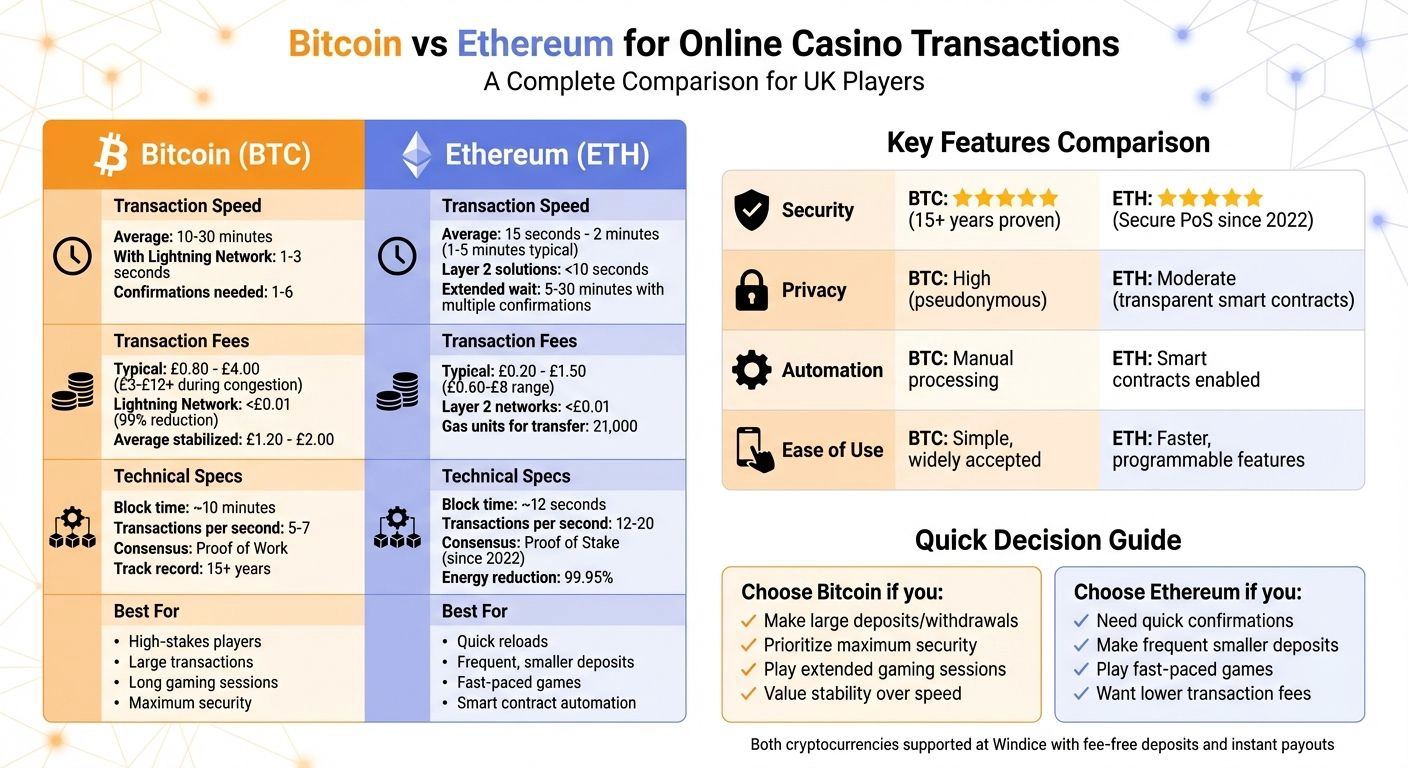
Bitcoin vs Ethereum for Online Casino Transactions: Speed, Fees and Features Comparison
Bitcoin: Speed and Fees
How Fast Are Bitcoin Transactions?
Bitcoin transactions aren't instant - they need to be broadcast to the network and validated by miners before being added to a block. Typically, this process involves one to six confirmations, taking anywhere from 10 minutes to an hour to ensure security. Many casino platforms require multiple confirmations to guarantee the transaction is final.
The main cause of delays is the mempool - a queue of unconfirmed transactions waiting for miners to process them. When the network gets busy, this backlog can leave transactions stuck for hours unless you pay a competitive fee. For time-sensitive activities like gaming, these delays can be frustrating. However, the Lightning Network offers a solution, processing transactions in just 1 to 3 seconds, making it perfect for fast-paced casino environments. By 2026, Windice plans to expand its support for Lightning deposits, enabling nearly instant funding of your account.
"Lightning Network technology acts as a turbocharger for Bitcoin casino transactions, slashing settlement times from 10-60 minutes down to 1-3 seconds while reducing fees by up to 99%." – Kenneth Bird
If your transaction gets stuck, you can use Replace-by-Fee (RBF) to speed up confirmation. Additionally, tools like mempool.space can help you check network congestion before sending funds. Keep in mind that if a transaction remains unconfirmed for more than 72 hours, the network might drop it, requiring you to resend it.
Now that we've covered speed, let's dive into the costs of Bitcoin transactions.
What Do Bitcoin Transactions Cost?
On-chain Bitcoin transactions typically cost between £1 and £5, with fees going directly to miners who prioritise transactions based on the amount paid. During times of heavy congestion, fees can spike dramatically - reaching as high as $59 (around £47) in April 2021. More recently, average fees have stabilised between $1.50 and $2.50 (roughly £1.20 to £2.00). For players making frequent deposits or withdrawals, these fees can add up quickly, particularly when playing with smaller stakes.
The Lightning Network offers a much cheaper alternative, with fees usually under £0.01 - a reduction of about 99% compared to on-chain fees. This makes it an excellent option for micro-stakes gambling, where even small fees could eat into your budget. Windice supports Lightning deposits, allowing you to fund your account without incurring high mainnet fees and enjoy near-instant transactions.
Most crypto casinos, including Windice, don't charge internal deposit fees, meaning you only pay the blockchain network fee. However, avoid using debit or credit cards directly on casino sites to purchase Bitcoin, as third-party processor fees can climb as high as 10%. Instead, consider using a regulated UK exchange like Coinbase, Kraken, or Gemini to buy Bitcoin and transfer it to your personal wallet before depositing.
If you're not in a hurry, you can save money by monitoring network congestion and waiting for off-peak times to send your transaction at a lower fee. For urgent deposits - such as funding your account for live betting - be prepared to pay a premium to ensure miners prioritise your transaction.
Ethereum: Speed and Fees
How Fast Are Ethereum Transactions?
Ethereum operates significantly faster than Bitcoin, thanks to its Proof of Stake consensus mechanism. With a block time of around 12 seconds and a transaction throughput of 12–20 per second, most casino transactions are finalised within 2–5 minutes. If multiple confirmations are needed, this timeframe can extend to 5–30 minutes.
However, during "gas wars" - periods of high demand - transactions can be delayed for hours unless you're willing to pay a higher priority fee. For UK players, avoiding peak hours (8:00 AM to 12:00 PM UTC) can help sidestep these delays. Weekends are another good time to transact, as network activity tends to be lower.
To avoid unnecessary waiting, tools like Etherscan's Gas Tracker allow you to monitor real-time network conditions before making a transaction. Additionally, if your casino supports Layer 2 solutions like Arbitrum or Optimism, you can completely bypass mainnet congestion. These networks handle over 1,000 transactions per second and settle them in under 10 seconds.
Now that we've covered Ethereum's speed, let's take a closer look at its fee structure.
What Do Ethereum Transactions Cost?
Ethereum transaction fees, often referred to as "gas fees", reflect the computational power needed to process the transaction. A simple ETH transfer requires 21,000 gas units. The total fee is determined by multiplying the gas units by the sum of the base fee (set by the protocol and burned) and the priority fee (a tip to incentivise validators).
Under normal conditions, depositing funds into a casino typically costs between £0.60 and £8. However, during periods of heavy network traffic, fees can surge to £10 or more, as users bid higher priority fees to secure their transactions in the next block. The base fee fluctuates by up to 12.5% per block depending on congestion levels.
To save on fees, plan your transactions during quieter hours when demand is lower, reducing the base fee. Tools like ETH Gas Tracker or the Blocknative Chrome extension can help you monitor gwei prices in real time. If your casino supports Layer 2 networks, you can cut fees to under £0.01 - a dramatic cost reduction compared to mainnet transactions.
To further control costs, set a maxFeePerGas in your wallet to cap the total fee. Any unspent amount will be refunded. Also, ensure your gas limit is at least 21,000 for standard transfers to prevent "out of gas" errors, which can result in losing your fee without completing the transaction.
These features make Ethereum an appealing option for players seeking quick, affordable deposits and withdrawals at online casinos.
Speed and Fees Comparison
Here's a quick comparison of Ethereum, Bitcoin, and Layer 2 networks:
| Feature | Bitcoin (Mainnet) | Ethereum (Mainnet) | Layer 2 / Lightning |
|---|---|---|---|
| Avg. Block Time | ~10 minutes | ~12 seconds | Near-instant |
| Avg. TPS | 5–7 | 12–20 | 1,000+ |
| Typical Wait Time | 10–60 minutes | 1–5 minutes | <10 seconds |
| Typical Fee (GBP) | £3–£12+ | £0.60–£8 | <£0.01 |
| Consensus | Proof of Work | Proof of Stake | Off-chain/Rollup |
For players who value both speed and affordability, Ethereum's mainnet strikes a balance between Bitcoin's slower but highly secure network and the ultra-fast Layer 2 solutions. If you're making frequent, smaller deposits, Layer 2 options offer the best value - provided your casino supports them.
Security and User Experience
Bitcoin Security and Ease of Use
Bitcoin’s security is rooted in its Proof of Work consensus mechanism, which has been running reliably for over 15 years. Miners solve intricate computational puzzles to validate transactions, creating a decentralised network that’s incredibly challenging to compromise. For UK players using Windice, this means deposits and withdrawals are supported by one of the most reliable systems in the cryptocurrency world.
One key feature of Bitcoin transactions is their irreversibility. This protects against chargeback fraud, a common issue with traditional payment methods. However, it also means users must double-check recipient details - sending Bitcoin to the wrong wallet address results in permanent loss of funds.
Bitcoin also provides strong privacy protections. Transactions require only a wallet ID, keeping personal information off the blockchain. That said, since the ledger is public, wallet balances and transaction histories are visible to anyone. High-value accounts could attract attention, so UK players are encouraged to use hardware wallets, such as Ledger, for added security.
Ethereum Security and Ease of Use
Ethereum transitioned to a Proof of Stake system in 2022 during “The Merge,” slashing its energy consumption by 99.95% while maintaining robust security measures. Validators stake ETH to process transactions, which incentivises honest behaviour. By October 2025, users had staked approximately £132 billion in Ethereum-based DeFi applications, showcasing the network’s widespread trust.
One standout feature of Ethereum is its smart contract functionality. These self-executing programmes automate payouts, meaning winnings are instantly sent to your wallet without manual processing. Additionally, smart contracts enable provably fair gaming, allowing players to verify game outcomes using cryptographic hashes, ensuring transparency and fairness.
Like Bitcoin, Ethereum transactions are irreversible once confirmed. While Ethereum provides moderate privacy - wallet IDs offer basic anonymity - interactions with smart contracts are publicly visible. To minimise risks, always verify wallet addresses before confirming transactions.
These features highlight the strengths and trade-offs of each cryptocurrency, setting the stage for a side-by-side comparison.
Pros and Cons Comparison
Here’s a breakdown of the key security and user experience features for Bitcoin and Ethereum:
| Feature | Bitcoin (BTC) | Ethereum (ETH) |
|---|---|---|
| Security Track Record | 15+ years of reliability | Secure Proof of Stake since 2022 |
| Privacy Level | High (pseudonymous) | Moderate (transparent smart contracts) |
| Automation | Manual processing | Automated via smart contracts |
| Ease of Use | Simple transfers, widely accepted | Faster confirmations, programmable features |
| Primary Risk | Slower speed, higher volatility | Smart contract vulnerabilities |
Both Bitcoin and Ethereum comply with UK regulatory standards while offering the speed, privacy, and reliability that appeal to online casino players.
Using Bitcoin and Ethereum at Windice
Platform Support
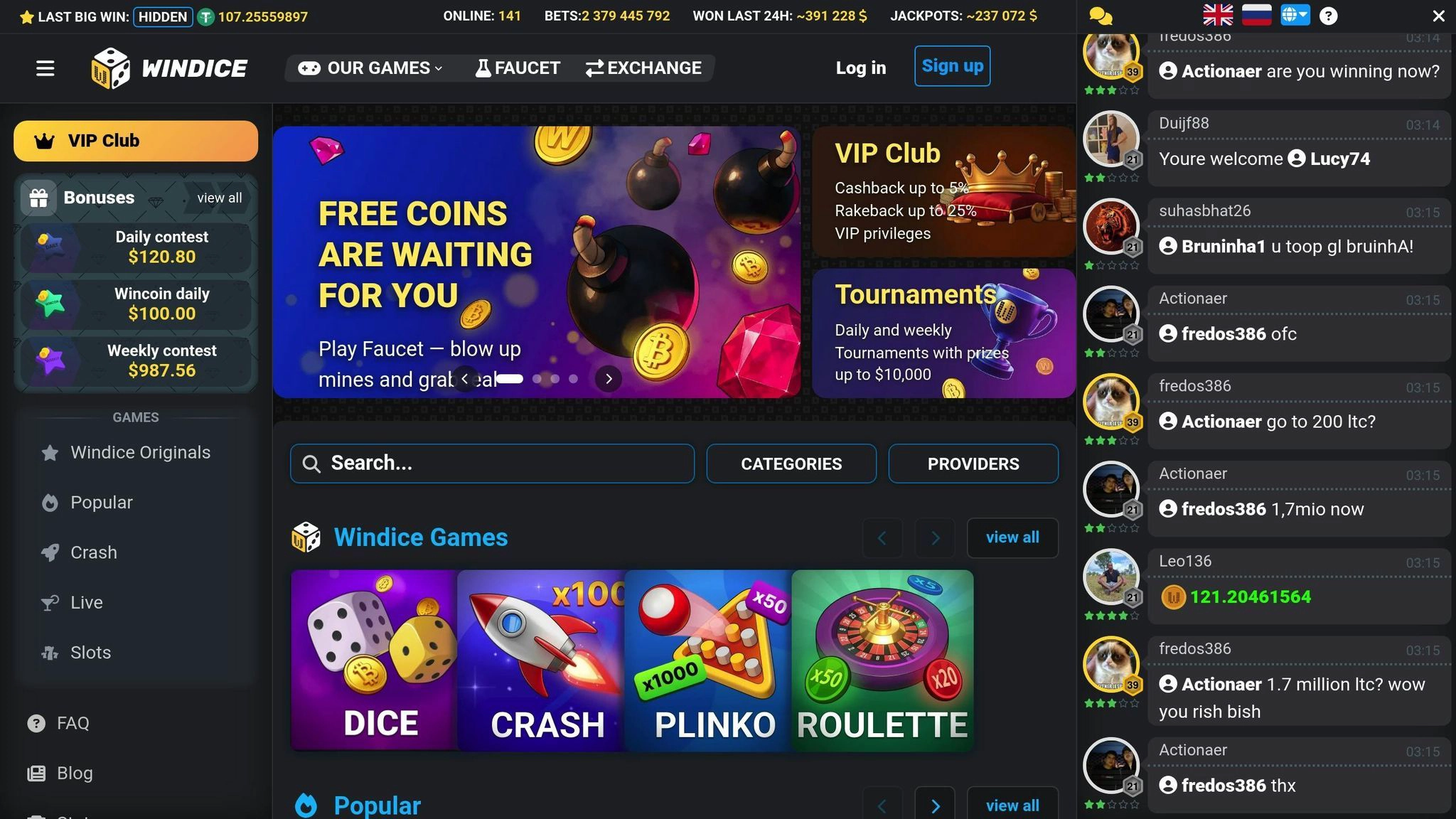
Windice fully supports both Bitcoin and Ethereum, making it easy for UK players to handle deposits and withdrawals using these popular cryptocurrencies. The platform offers fee-free deposits and instant payouts, so you can transfer funds without losing any value. Plus, whether you prefer Bitcoin or Ethereum, you’ll still enjoy access to the platform’s VIP rewards system. This includes cashback, rakeback, and exclusive bonuses across six membership levels.
But that’s not all. Windice’s cryptocurrency features go beyond just transactions. You can join weekly wagering contests, claim no-deposit bonuses, and take advantage of the progressive faucet feature. This flexibility allows you to select your preferred cryptocurrency based on your gaming preferences, without sacrificing any of the platform’s perks. The choice between Bitcoin and Ethereum largely depends on your playing style and risk appetite.
When to Use Each Cryptocurrency
Picking the right cryptocurrency can make your gaming experience at Windice even smoother. Bitcoin is a great choice for high-stakes players who value stability and security. Its 10–30-minute confirmation time works well for extended live dealer games like blackjack or roulette. Additionally, Bitcoin’s lower price volatility makes it a solid option for larger deposits, helping you maximise the VIP rewards tied to substantial wagers.
On the other hand, Ethereum is ideal for fast-paced games. With confirmation times ranging from 15 seconds to 2 minutes, it’s perfect for quick reloads in games like crash, slots, or plinko. Ethereum also tends to have lower transaction fees - typically between £0.08 and £1.60 - compared to Bitcoin, which ranges from approximately £0.80 to £4.00. This makes Ethereum a more cost-effective choice for frequent, smaller deposits, especially if you’re aiming to climb the leaderboard in wagering contests.
To manage price fluctuations, keep an eye on GBP values using exchanges like Binance or Kraken. For added security, consider storing your gaming funds in a separate wallet. Online wallets like Coinbase offer convenience, while hardware wallets such as Ledger provide extra protection for larger balances.
Ethereum Vs. Bitcoin: What Sets Them Apart? | CNBC
Which Should You Choose?
Deciding between Bitcoin and Ethereum ultimately comes down to your gaming habits and transaction priorities. If you're dealing with large deposits or withdrawals and value security and stability above all, Bitcoin might be the better fit. Its longer confirmation times make it ideal for extended gaming sessions and significant fund transfers. On the other hand, Ethereum's much faster confirmation times - typically within 2–5 minutes - make it a great option for frequent, smaller transactions during active gameplay.
At Windice, both cryptocurrencies are supported with fee-free deposits and instant payouts, giving you the flexibility to choose based on your specific needs. High-stakes players often prefer Bitcoin because of its reputation as "digital gold", while Ethereum appeals to those seeking quick reloads and lower transaction fees, thanks to its speed and advanced programmability.
Think about your gaming priorities before transferring funds. If you're in the middle of a session and need to top up quickly to join a live table or claim a time-sensitive bonus, Ethereum's rapid confirmations can be a lifesaver. On the flip side, if you're withdrawing substantial winnings to store securely, Bitcoin's robust security features provide extra peace of mind.
To make your transfers even more efficient, you can check current network conditions using tools like mempool.space for Bitcoin or Etherscan for Ethereum. If keeping transaction costs low is important, consider exploring Layer 2 solutions. Just make sure Windice supports these options before proceeding.
FAQs
What’s the difference between Bitcoin and Ethereum transaction speeds for online casinos?
Bitcoin transactions usually take about 10 minutes for a single confirmation. However, during peak times, this can stretch to an hour or longer. This delay stems from Bitcoin's original proof-of-work system, which processes transactions at a slower pace.
On the other hand, Ethereum is built to handle a significantly higher volume of transactions per second. Confirmations typically occur within a few seconds to a minute. With the ETH 2.0 upgrades and layer-2 solutions, transactions often feel nearly instantaneous. This speed makes Ethereum a more practical option for casino deposits and withdrawals, especially for time-sensitive activities like live dealer games or fast-paced slots.
How do the costs of using Bitcoin and Ethereum compare for casino deposits?
When depositing at online casinos, the fees for Bitcoin (BTC) and Ethereum (ETH) can differ quite a bit. For Bitcoin, fees are influenced by the transaction size in bytes. During peak times, these fees can range from £2 to £10 or even higher, which makes Bitcoin less appealing for smaller deposits, as the fees can take up a noticeable chunk of the total amount.
Ethereum calculates fees using a 'gas' system, which is based on the computational effort needed for a transaction. Typically, Ethereum fees are lower under normal conditions, often ranging from just a few pence to a couple of pounds. However, when the network is busy, gas prices can rise sharply, leading to higher costs.
For UK players looking to deposit smaller amounts (e.g., £20-£50), Ethereum tends to be the more affordable choice - assuming the network isn’t heavily congested. For larger deposits, though, the cost difference between Bitcoin and Ethereum becomes less pronounced.
What are the benefits of Ethereum’s smart contracts for online casino players?
Ethereum's smart contracts make it possible to automatically enforce game outcomes and handle on-chain payouts. This eliminates the need for third-party involvement, allowing players to experience instant and transparent settlements.
Thanks to smart contracts, online casino transactions are not only more secure but also more reliable. The decentralised and tamper-resistant nature of the process provides players with confidence and ensures a seamless gaming experience.